It’s a very common belief: “My cat never goes outside, so vaccines aren’t necessary.”But the reality is a bit different—and understanding it can protect your cat’s life.
The Short Answer ✅️
Yes, indoor cats still need vaccines.
Why Vaccines Matter (Even for Indoor Cats)
Vaccines train your cat’s immune system to recognize and fight dangerous infections before they become life-threatening.
Here’s why indoor cats are still at risk:
1. Hidden Exposure Inside the Home
Disease-causing organisms (pathogens) can enter your home in surprising ways:
- On your clothes, shoes, or hands
- Through open windows or doors
- Via objects like carriers or furniture
Some viruses can survive on surfaces for long periods, meaning your cat doesn’t need direct outdoor contact to be exposed.
2. Accidental Escapes Happen
Even strictly indoor cats can:
- Slip out through an open door
- Escape during transport or vet visits
A short time outside is enough to encounter infectious diseases.
3. Contact With Other Animals
- Visiting pets
- Newly adopted cats
- Wildlife (like bats entering homes)
These situations can expose your cat to serious infections, including rabies.
4. Some Diseases Are Highly Contagious
Certain feline diseases spread easily and can be fatal, such as:
- Feline panleukopenia (distemper)
- Feline herpesvirus
- Calicivirus
- Rabies
These are considered core vaccines because of their severity and widespread risk.
Core vs Non-Core Vaccines 💉
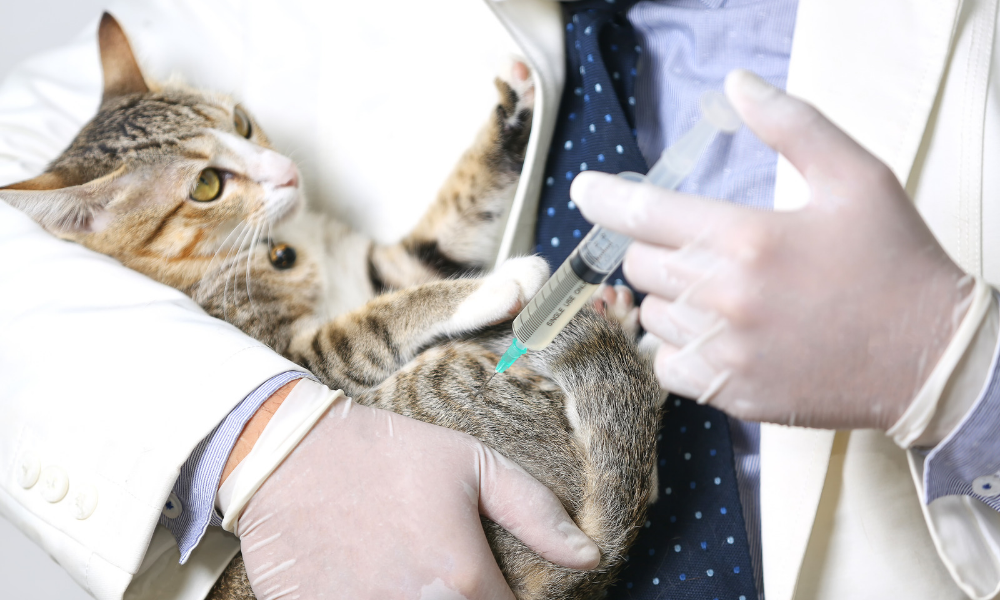
Core Vaccines (Recommended for ALL cats)
- Rabies
- FVRCP (protects against herpesvirus, calicivirus, panleukopenia)
Non-Core Vaccines (Based on Risk)
- Feline leukemia virus (FeLV)
- Others depending on lifestyle
Final Thoughts
Keeping a cat indoors reduces risk—but doesn’t eliminate it.Vaccination acts as a safety net against unpredictable exposures that can happen even in the safest homes.
Think of it this way:Your cat may never face danger—but vaccines ensure they’re protected if they do.
If you want to learn more about pet vaccinations, check out our article series.