What if your pet is in pain — and you have absolutely no idea?
No crying. No obvious limping. Just a dog who’s a little quieter today, or a cat who skipped her favorite spot on the couch. These tiny shifts are easy to brush off as “just a bad day.”
But here’s what we’ve learned after years of working with pets: those small, easy-to-miss changes are almost always the first whisper of something wrong.
And the sooner you catch it, the better everything goes from here.
Here’s the Hard Part
Dogs and cats don’t cry, call out, or point to where it hurts. And honestly, most of the time they actively hide that anything is wrong. It goes back to their wild instincts — showing weakness meant danger. So even a dog wagging its tail at the door could quietly be in pain behind that happy greeting.
Cats are even sneakier about it. By the time they look painful to you, they’ve often been struggling for a while.
This is exactly why knowing the signs matters so much.
If Your Dog Is in Pain, Watch for This

It’s rarely dramatic. Most of the time, it’s small things that keep stacking up:
- They’re slower getting up in the morning, or stiff after a nap
- They’ve stopped jumping on the couch — and they used to love it
- They’re licking or chewing one spot on their body over and over
- They had an accident inside, when they normally never do
- They snapped or growled when you touched a certain area — completely out of character
- Their posture looks different — back slightly arched, head a little low, tail tucked
- They’re just… quieter. Less interested. More withdrawn.
Any one of these on its own might mean nothing. But two or three together? That’s your pet telling you something.
We know these signs can be easy to second-guess — so we put this together to show you exactly what to look for in your dog:
If Your Cat Is in Pain, It Looks Different
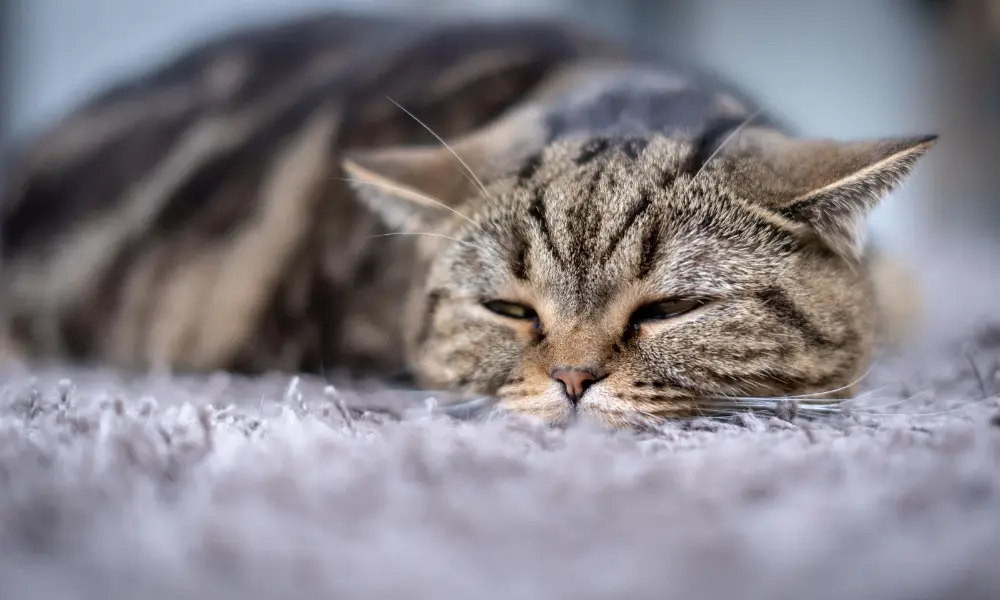
Cats are masters of the slow fade. Their signs are subtle enough to miss for weeks:
- Their coat starts looking dull or messy — a cat in pain often stops grooming
- They’ve stopped jumping up to their favorite windowsill or shelf
- The litter box is being avoided, or they cry while using it
- They’re hiding in spots they never used to care about
- Their eyes look slightly squinted, ears flattened back
- A cat who used to follow you around is now nowhere to be found
Common signs of chronic pain in cats include inability or reluctance to jump without using an intermediate surface, a dull or unkempt coat, decreased appetite, and changes in sociability. (DVM360) Sound familiar? Trust that feeling.
Cats are tricky, and words only go so far — watch this to see these pain signs in action:
Please — Don’t Reach for Your Medicine Cabinet
We see this happen a lot, and it comes from a good place. Your pet is hurting and you want to help right now. But human pain medications — ibuprofen, acetaminophen, aspirin — are genuinely dangerous for dogs and cats.
Their bodies lack certain enzymes needed to safely break down these medications, and toxic effects can begin within just one to two hours. (GSVS)
Cats are especially vulnerable. Even a tiny amount can be fatal.
The rule is simple: nothing from your medicine cabinet without your vet’s say-so. Nothing.
So What Do You Do Right Now?
Start small but start now:
- Grab your phone and record a short video of anything that looks off — how they walk, how they get up, how they’re resting. Pets often act completely normal at the vet’s office, and a video is worth more than a thousand words.
- Write down what you’ve noticed and when — even rough notes help your vet piece things together.
- Book that appointment. Don’t wait another week to see if it clears up on its own.
You Know Your Pet Better Than Anyone
We always say this to pet owners — and we mean it. No vet sees your dog or cat every single day the way you do. You notice the tiny shifts. The slightly different way they tilted their head. The meal they left untouched.
When your pet is in pain, you’re usually the first one to sense it — even before you can name exactly what’s wrong. So trust yourself. Act on it early. Because catching pain early isn’t just kinder — it genuinely leads to better outcomes and faster recovery.
Your pet can’t say “I hurt.” But they’re telling you in every way they know how.
Read More :
H5N1 Bird Flu in Cats: What the CDC’s Historic 2026 Finding Means for Your Pet
Dog Allergies & Itching: The Complete 2026 Treatment Guide (Including the New Befrena Injection)