
Your dog was totally fine ten minutes ago. Now he’s lying on his side, breathing too fast, and your heart has completely dropped. Can you imagine it ? A pet emergency doesn’t knock first — it just shows up. And in those terrifying few seconds, most pet owners freeze because they have no idea what to do next.
Here’s the thing though. You don’t need a vet degree to handle a pet emergency well. You just need to know a few key steps — and you need to know them before it happens.
First — Don’t Panic (Your Pet Needs You Calm)

This is honestly the hardest part. But the moment you panic, you make mistakes. Take one breath. Your pet is already scared and in pain — a calm owner makes a real difference to how they respond.
As the American Veterinary Medical Association reminds pet owners, first aid is not a substitute for veterinary care — but it can absolutely save your pet’s life until you get them proper help. (American Veterinary Medical Association)
Warning Signs That Mean It’s a Pet Emergency Right Now

Knowing what counts as a real pet emergency is half the battle. Don’t wait on these:
- Struggling to breathe, gasping, or blue/pale gums
- Collapsing, sudden weakness, or can’t stand up
- Seizures — especially ones lasting more than a few minutes
- Profuse bleeding that won’t slow down
- Suspected poisoning (chewed plant, missing medication, vomiting suddenly)
- Bloated or swollen belly, especially in larger dogs
- Straining to urinate or unable to go at all
- Unconscious or unresponsive
If you’re seeing any of these, don’t sit and Google it. Call your vet or head straight to an emergency animal hospital.
Step-by-Step: What to Do in a Pet Emergency

1.Call ahead
Call your veterinarian or emergency hospital before you leave — so they can be ready the moment you walk through the door. Those few minutes matter.
2.Keep them still and warm
Minimize movement as much as possible. If there’s any chance of a spinal injury or internal trauma, movement can make things worse. Cover them lightly with a blanket to keep their body temperature stable.
3.Muzzle if needed — gently
Even the sweetest dog can bite when they’re in pain. It’s not aggression — it’s fear. Use a soft muzzle if you have one. Never muzzle a pet that is vomiting or struggling to breathe.
4.Control bleeding
Press a clean, thick cloth or gauze firmly against the wound. Hold steady pressure for at least three minutes without peeking. Keep the pressure going all the way to the vet.
5.Suspected poisoning? Don’t guess
If you know or suspect your pet has swallowed something harmful, call the Animal Poison Control Center hotline at 888-426-4235 immediately — and try to have details ready: what they ate, how much, and when. (American Veterinary Medical Association)
Don’t induce vomiting on your own unless a vet or hotline specifically tells you to.
6.Seizures — don’t hold them down
Clear the area around them so they can’t hurt themselves. Don’t put your hands near their mouth. Time the seizure — that information is genuinely helpful to your vet.
Keep a Pet First Aid Kit Ready
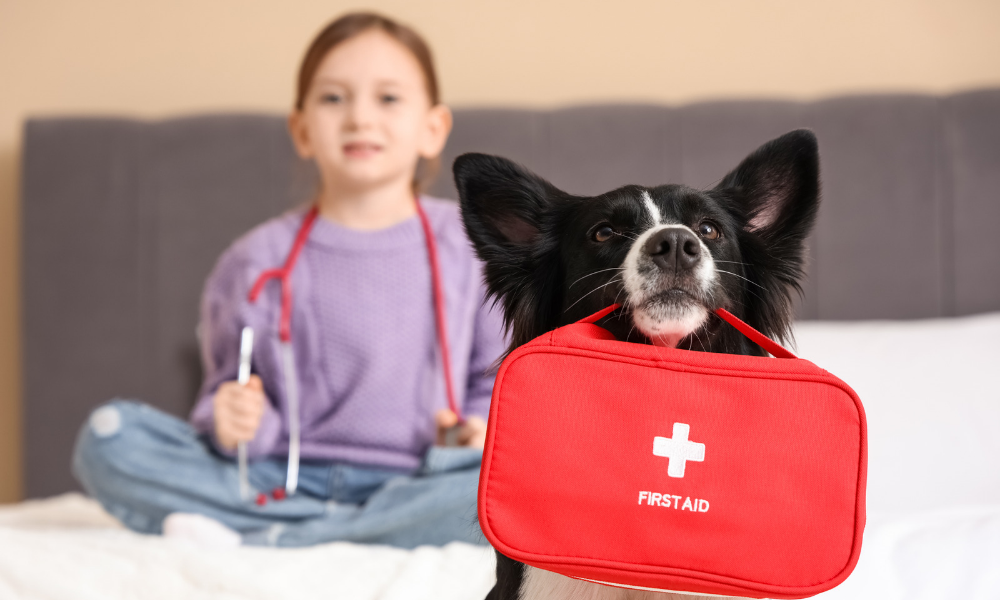
A pet emergency hits faster than you can shop for supplies. Keep these basics ready at home:
- Gauze pads and adhesive bandages
- Digital thermometer
- Saline solution
- Muzzle
- Your vet’s number + nearest 24-hour emergency vet
- Poison Control number (save it in your phone today)
You’ve Got This
Nobody wants to think about their pet having an emergency. But the pet owners who handle it best aren’t the ones who stayed calm by accident — they’re the ones who knew what to do.
You’re already doing that part right by reading this. Keep that first aid kit stocked, know your nearest emergency vet, and save that poison hotline number.
Your pet is counting on you — and now you’re ready.
Read More :
Top 3 Dog Emergencies Every Owner Must Know
Silent Warning Signs of Food Toxicity in Pets Most Owners Mistake for Normal Behavior
Dental Disease in Pets: Why Your Vet Keeps Bringing It Up
Why Does My Dog Eat Grass? — Causes, Risks & How to Prevent It
Separation Anxiety in Dogs: Causes, Signs & What Actually Works