
Let me guess. You’ve caught yourself looking at your dog lately — really looking — and something feels off. Maybe they take a beat longer to hop up onto the bed now. Maybe that walk around the block, the one they used to bounce through, leaves them a little more out of breath than you remember.
And there’s that question sitting in the back of your mind: is my dog overweight?
Here’s the thing — you’re not being paranoid. More than half of dogs in the U.S. are carrying extra weight these days, so if you’re wondering, odds are decent that you’re onto something.
And I’ll be straight with you, because I think you’d want to know: dogs at a healthy weight can live up to two and a half years longer than dogs who are overweight. That’s not a scare tactic, that’s just what the research keeps showing us (American Kennel Club). So let’s not wait on this.
Grab five minutes right now and let’s check together.
Forget the Scale for a Second
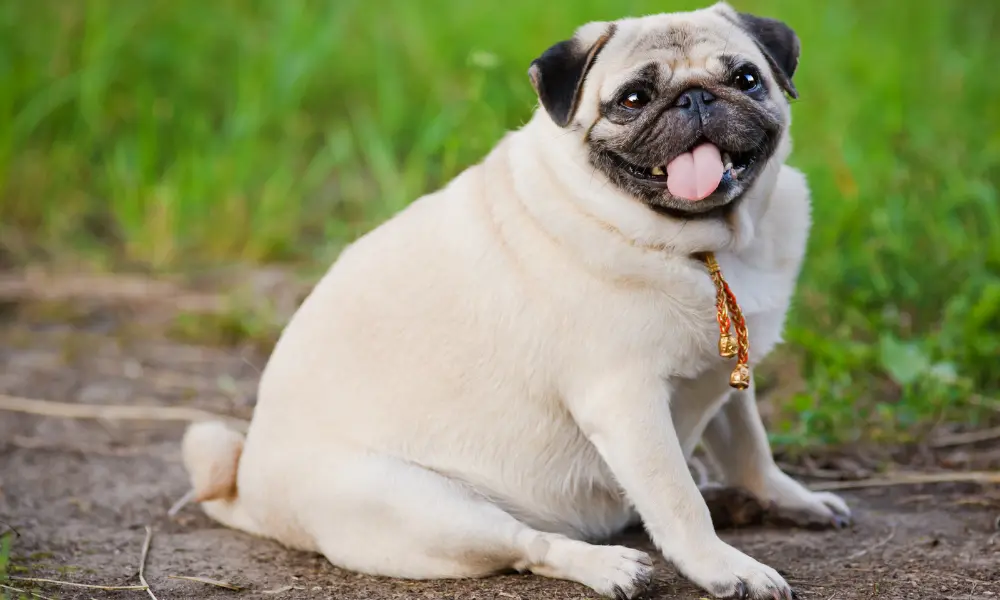
Here’s something that trips a lot of owners up — they think weight is just weight, a number on a scale, simple as that. But it’s really not, not for dogs. A 60-pound dog could be built like an athlete, or could be carrying a dangerous amount of extra padding, and the number alone won’t tell you which.
Think about a Lab standing next to a Whippet, both at 60 pounds. Completely different stories.
This is exactly why vets don’t just weigh your dog and send you on your way. We use something called a Body Condition Score instead — basically a hands-on way of reading your dog’s actual shape, not just their weight. Picture a scale from 1 to 9. Sitting at 4 or 5 is where you want to be.
Once you’re up around 6 or 7, that’s overweight territory. And 8 or 9 means obesity. So really, the question isn’t “how much does my dog weigh” — it’s “how much of that is fat.”
Three Things You Can Check Right Now, No Tools Required

Okay, here’s the fun part — well, fun might be a stretch, but it’s genuinely quick.
Start with the ribs – Rest both thumbs along your dog’s spine and let your fingers spread out over their ribcage. Press in gently and feel around. If you can pick out each rib without much effort — sort of like feeling the knuckles on the back of your own hand — that’s a great sign.
If you’re really having to dig in before you find anything, that’s your dog telling you something. And if you press and press and just… nothing? That’s obesity, plain and simple. One heads up: fluffy or thick-coated dogs can trick your eyes here, so trust your hands more than your eyes for this one.
Then look from above – Stand over your dog and just look down at their outline. You’re hoping to see a waist — a little inward curve behind the ribs before the hips flare back out. If instead your dog looks more like a loaf of bread, straight all the way down with barely any curve, that’s a sign they’ve got extra weight on board.
Last, check the side view – Step back and look at their profile. A healthy dog’s belly tucks upward, rising from the ribcage up toward the back legs. An overweight dog’s belly tends to hang flat, or even sag below that line.
Quick honest moment here — most of us are a little generous when we score our own dogs. It’s hard to notice slow change in an animal you see every single day. So if you’re not sure what you’re feeling or seeing, that’s exactly what your vet is there for. No judgment, promise.
Your Dog’s Behavior Is Talking Too
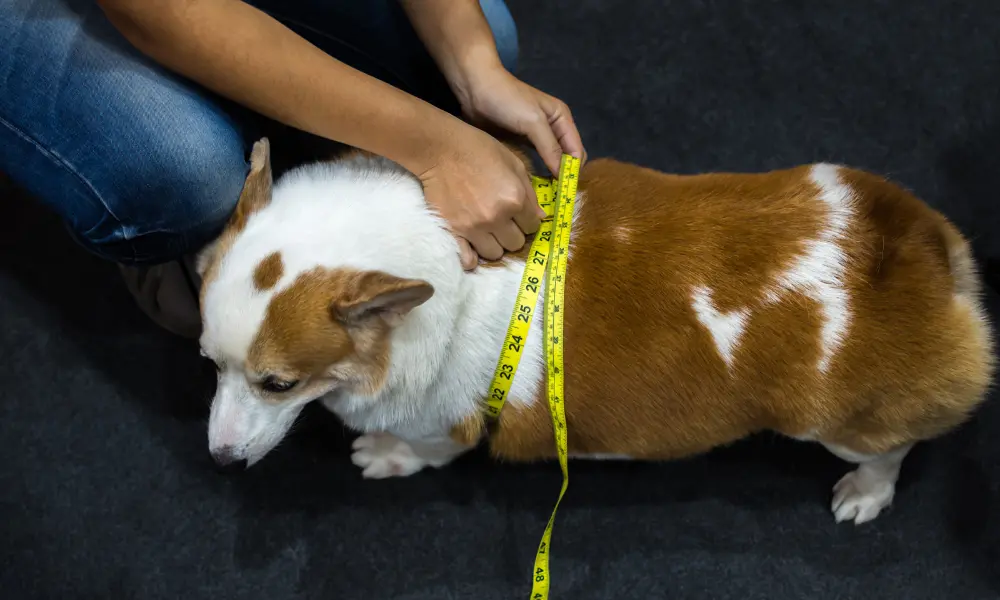
It’s not just about how they look — pay attention to how they act. Does your dog pant harder than usual after a short, easy walk? Do they seem to run out of steam faster during playtime than they used to? Are they hesitating before jumping in the car, or taking longer to get up after a nap?
Sleeping a lot more lately? Even struggling to reach around and groom themselves properly? All of these can be quiet little clues that weight has crept up before you’ve even noticed it on their body.
Why This Isn’t Just About Looks ?
I want to be honest with you here, because I think it matters. Dr. Carol Osborne, an integrative vet, put it about as clearly as it can be put: just being 10% over your dog’s ideal weight can shave a third off their expected lifespan, and opens the door to heart disease, kidney and liver problems, diabetes, arthritis, even cancer.
And here’s something that surprises a lot of pet owners — fat isn’t just sitting there doing nothing. It’s actually active tissue. It pumps out inflammatory compounds and creates stress on the body at a cellular level, which is why more and more vets talk about obesity less like “extra pounds” and more like a slow-burning inflammatory condition.
Joints wear down faster. The heart and lungs have to work overtime, every single day. Insulin resistance creeps in. And that two-and-a-half-year number? It’s one of the most consistently backed findings we have in dog health research.
How Dogs End Up Here — And Why It’s Not On You ?
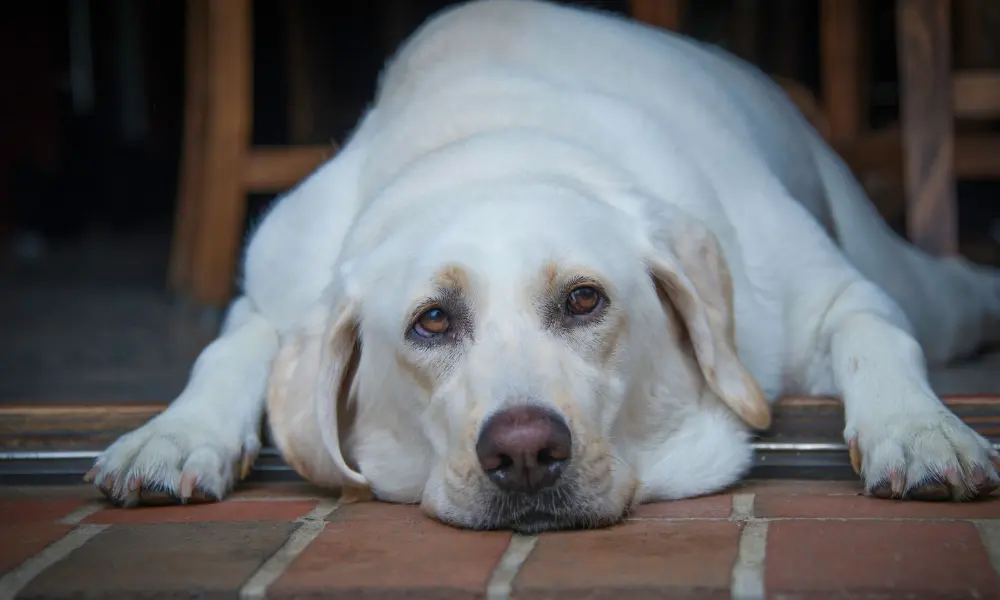
I promise you, this almost never comes down to a lack of love. Usually it’s just life. Maybe the bag of food says one serving, but that serving is actually more than your dog needs. Maybe it’s the handful of treats here, a little table scrap there, that quietly adds up to way more calories than you’d guess.
Maybe your dog free-feeds all day and nobody’s really counting anymore. Maybe life’s just gotten busier and the walks got shorter without you noticing. Getting spayed or neutered lowers a dog’s calorie needs too, and portions don’t always adjust to match.
And some dogs are just built to gain weight more easily — Labs, Beagles, Cocker Spaniels, Basset Hounds, Pugs, and Dachshunds all tend to pack it on more readily than other breeds. So if your pup falls into one of those categories, it’s not you failing them. It’s just something worth watching a little closer.
What You Can Do Starting Today ?
Good news — this is genuinely one of the most fixable things in a dog’s health. If your dog’s only a little over, trimming their daily food by around 10% and checking back in a month is often enough to start turning things around. A few easy places to start:
- Actually measure food with a cup or scale instead of eyeballing it
- Count treats as part of the day’s total calories, not extra
- Skip the table scraps, even the small ones
- Tack on ten more minutes to the daily walk
- Trade high-calorie treats for things like baby carrots, blueberries, or cucumber slices
Honestly, checking in on their body condition every month or two is a small habit that catches problems early, long before they become something bigger.
Where This Leaves Us ?
Noticing your dog might be carrying a little extra isn’t something to feel bad about — it’s actually a sign of how closely you pay attention to them. And here’s what I want you to walk away with: this is fixable. Genuinely, meaningfully fixable, often within just a few weeks of small, steady changes.
Those two and a half extra years aren’t just a statistic. They’re more mornings together, more walks, more time on the couch. So go ahead, do those three quick checks today. Jot down what you notice.
And if something feels off, call your vet. It might turn out to be one of the kindest things you ever do for your dog.
READ MORE:
Dog Ear Infections: Early Signs Every Owner Should Recognize
Why Is My Cat Throwing Up? What’s Normal and What’s Not
Why Is My Dog Licking Their Paws? Here’s What It’s Really Telling You
Why Is My Dog Drinking So Much Water? Here’s What Every Owner Should Know