Dog ear infections sneak up on you. One day your dog is fine. The next they’re shaking their head every few minutes, pawing at their ear, rubbing the side of their face along the carpet. And you’re left wondering — is this something minor, or is something actually wrong in there
Here’s the thing. Dog ear infections are one of the most common reasons owners bring their dogs to us — and they’re also one of the most commonly caught too late. Because the early signs are easy to dismiss as quirks. Until they’re not.
Why Dogs Get Ear Infections So Easily ?
Before the signs, it helps to understand why this happens so often in dogs specifically.
A dog’s ear canal is shaped like an L. That angle traps moisture, wax, and debris in a way a human ear simply doesn’t. Add warmth and darkness — and you have the perfect conditions for bacteria and yeast to grow. A single swim or bath can be enough to tip the balance.
Some dogs are built with extra vulnerability:
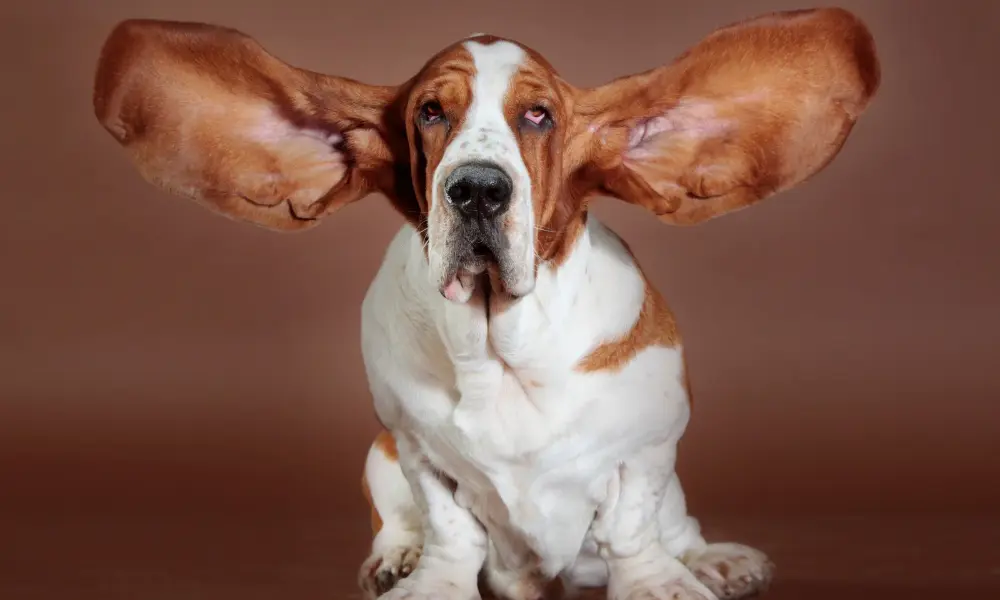
- Floppy-eared breeds — Cocker Spaniels, Basset Hounds, Golden Retrievers — because the flap blocks airflow and keeps the canal moist
- Dogs with narrow or hairy canals — Poodles, Schnauzers, Shih Tzus
- Frequent swimmers — water in the canal is one of the most common triggers
- Dogs with allergies — allergic inflammation of the ear creates the perfect environment for infection to take hold
The Early Signs of Dog Ear Infections

This is the part that matters most — because catching dog ear infections early changes everything about how quickly and easily they resolve.
Head shaking
- The most classic first sign — repeated, vigorous shaking that keeps coming back
- Important: hard, repeated head shaking can rupture a blood vessel in the ear flap and create a painful swelling called a hematoma. If your dog won’t stop shaking, don’t wait
Scratching or pawing at the ear
- Dogs can’t point to where it hurts — so they scratch
- Scratching that causes hair loss or draws blood around the ear means the infection has likely been building for a while
An odour you can’t ignore
- A healthy ear has no smell at all
- Yeast infections produce a musty, sweet, almost bread-like smell
- Bacterial infections smell more sharply unpleasant — sour or pungent
- If you can smell your dog’s ear from a normal distance, that’s your signal
Discharge inside the ear
- Dark brown or black and waxy → usually yeast
- Yellow or greenish → typically bacterial
- Dark, crumbly, coffee-ground appearance → often ear mites, especially in younger dogs
Redness or swelling
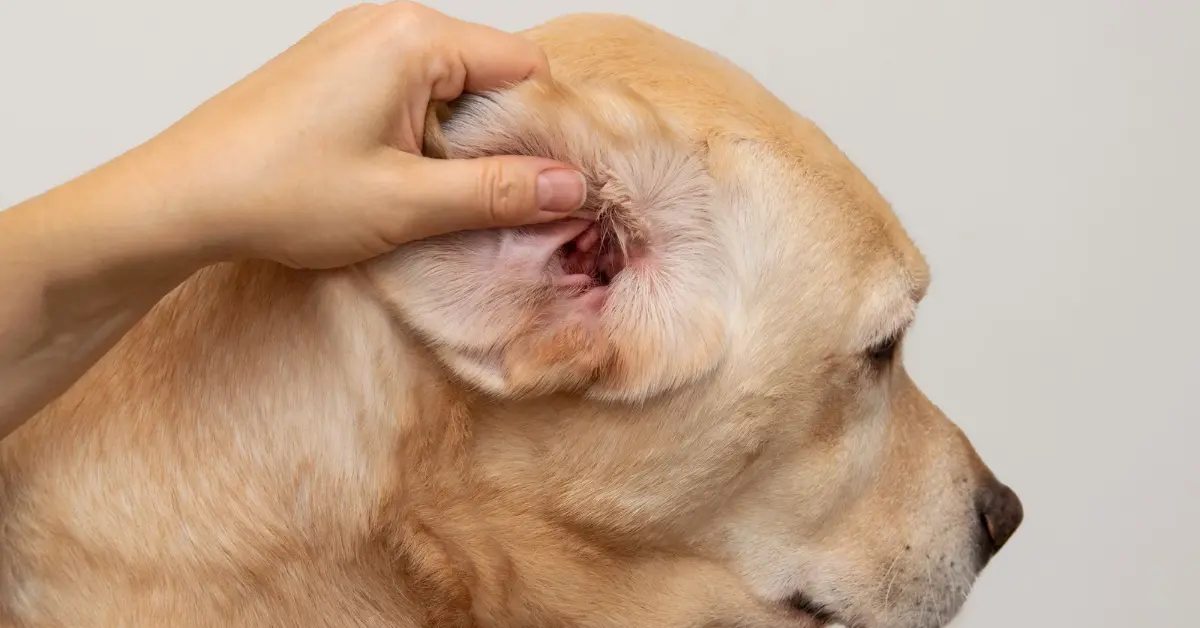
- A healthy ear interior is pale pink and clean
- Visible redness, warmth to the touch, or a canal that looks narrower than usual → early infection developing
Head tilt
- A slight tilt toward the affected ear is common with outer ear infections
- A persistent tilt that doesn’t go away — especially with balance problems or stumbling — means the infection may have spread deeper. That’s an urgent vet visit
Sensitivity when touched
- A dog who pulls away, cries, or snaps when you touch near the ear isn’t being dramatic
- They’re telling you it hurts — and that’s important information
What’s Usually Causing It ?
According to the American Kennel Club, dog ear infections occur when there is overgrowth of yeast, bacteria, or both in the ear canal — and the most common underlying triggers are:
- Moisture trapped after swimming or bathing
- Allergies — environmental or food-related; this is actually the most overlooked root cause of recurring ear infections
- Ear mites — more common in puppies, highly contagious between pets
- Foreign objects — grass seeds working into the canal during summer walks
- Hormonal imbalances — thyroid or adrenal conditions that change the ear environment
What NOT to Do at Home ?
We need to say this clearly because it matters:
- Never put cotton swabs into the ear canal — they push debris deeper and can damage the eardrum
- Don’t use hydrogen peroxide or rubbing alcohol — they burn an already inflamed ear and cause real damage
- Don’t use leftover drops from a previous infection — different infections need different medications
- Don’t wait and hope it clears up on its own — dog ear infections almost never resolve without treatment, and they almost always get worse
When to Call Your Vet ?
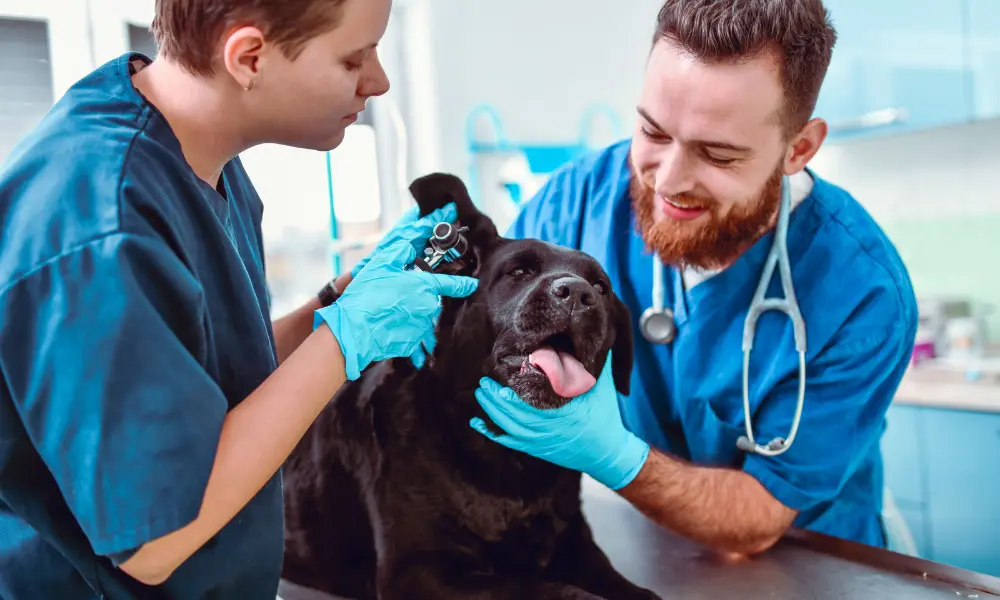
Call today if:
- Head shaking or scratching has been going on for more than 24–48 hours
- You can see redness, discharge, or smell anything unusual
- Your dog flinches when you gently touch the ear
Go to an emergency vet if:
- Head tilt is combined with stumbling, circling, or loss of balance
- There’s bloody discharge
- Your dog seems in severe pain — refusing to eat, crying, won’t let anyone near the ear
What Happens If You Wait ?
Without the right treatment, dogs can have permanent damage or scarring to the ear — putting them at higher risk for future infections and possible hearing loss.
An outer ear infection caught in week one looks very different from one that’s been running for a month. The treatment is simpler, faster, less expensive — and far less painful for your dog.
One Last Thing
Dog ear infections are common. But common doesn’t mean something you have to live with. Most cases clear completely with the right treatment — and the right treatment starts with catching it early.
You noticed the head shaking. You noticed the smell. You looked it up.
Now go check those ears — and if something doesn’t look or smell right, make that call today.
READ MORE:
Why Is My Dog Licking Their Paws? Here’s What It’s Really Telling You
Why Is My Dog Drinking So Much Water? Here’s What Every Owner Should Know
Why Is My Dog Always Itching? 10 Common Causes and What You Can Do
Signs Your Cat Is Dehydrated: What Every Owner Needs to Know