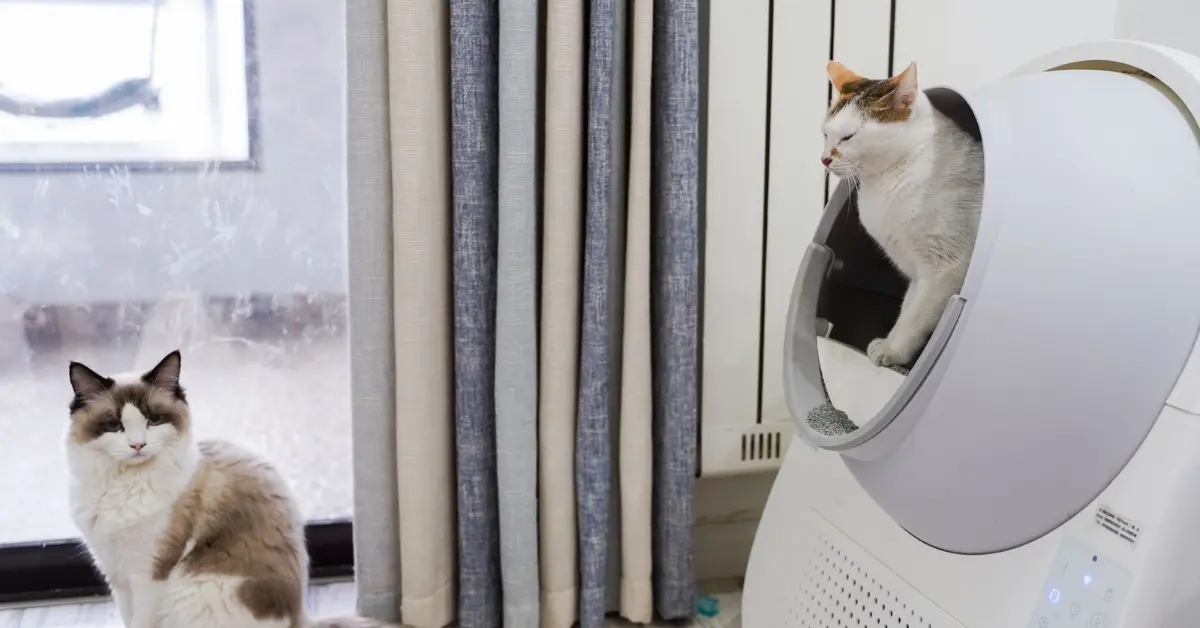
Automatic litter boxes are everywhere right now — in ads, in pet store displays, on every cat owner’s social media feed. And the idea is genuinely appealing. No more daily scooping. A cleaner box. A happier cat.
But before you spend a few hundred dollars on one, a question keeps nagging at you — is this actually safe for my cat?
It’s a fair question. And the honest answer is: for most healthy adult cats, Yes — but with some important conditions that nobody in the ads ever mentions.
How They Actually Work
Automatic litter boxes use weight or motion sensors to detect when your cat has used the box. After a set delay — usually 5 to 20 minutes — a raking, rotating, or flushing mechanism cleans the waste into a sealed compartment. The cat is long gone before anything moves.
That delay timer is everything. It’s the feature that separates a safe box from a dangerous one.
The Real Benefits — Beyond Just Convenience
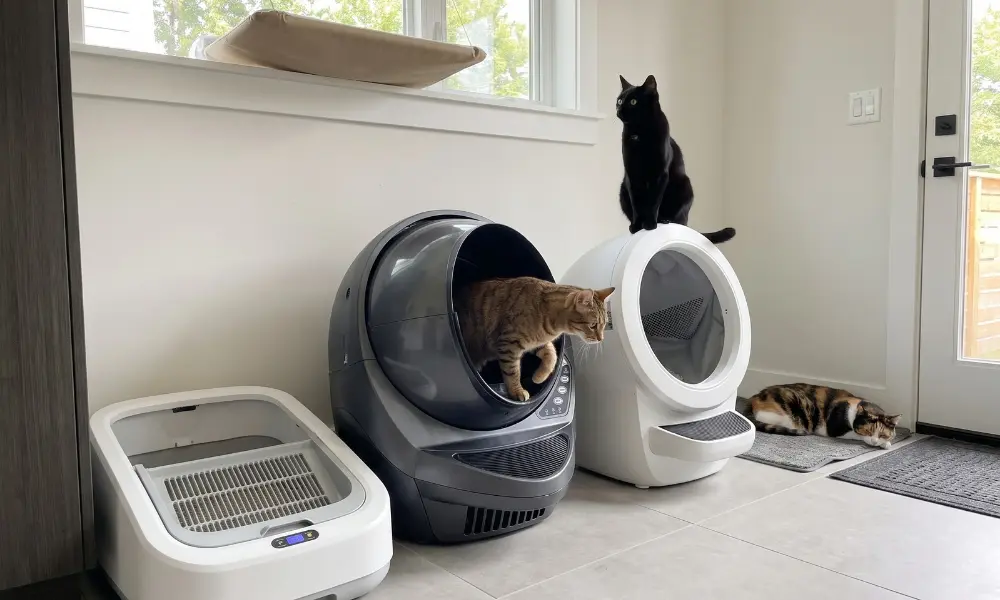
Yes, less scooping is nice. But the deeper benefits are worth knowing:
- Cleaner box, more consistent use — cats are fastidious and far more likely to use a clean box. This directly reduces litter box avoidance, one of the most common behavioral problems we see
- Health monitoring — many smart models track visit frequency, duration, and waste patterns. Changes in litter box habits are often the earliest sign of kidney disease, diabetes, or urinary problems — and a box that flags those changes before you’d normally notice is a genuinely useful health tool
- Reduced toxoplasmosis risk — for pregnant women or immunocompromised family members, eliminating daily manual scooping matters
The Safety Features That Actually Matter
Not all automatic litter boxes are built the same — and this is where cheap models genuinely fail:
- Cat-presence detection — weight sensor, motion sensor, or infrared. The single most critical feature. Without it, the cycle can activate while your cat is still inside
- Delay timer of at least 5 minutes — the longer and more adjustable, the better
- Emergency stop / obstruction detection — the mechanism halts immediately if resistance is felt
- Open entry that never closes during a cycle — your cat should always be able to exit freely
Sadly, there have been multiple reported cases of cats being injured in poorly designed or counterfeit automatic litter boxes. If a model doesn’t clearly describe its sensor system, walk away — the risk isn’t worth it.
Which Cats Should NOT Use One
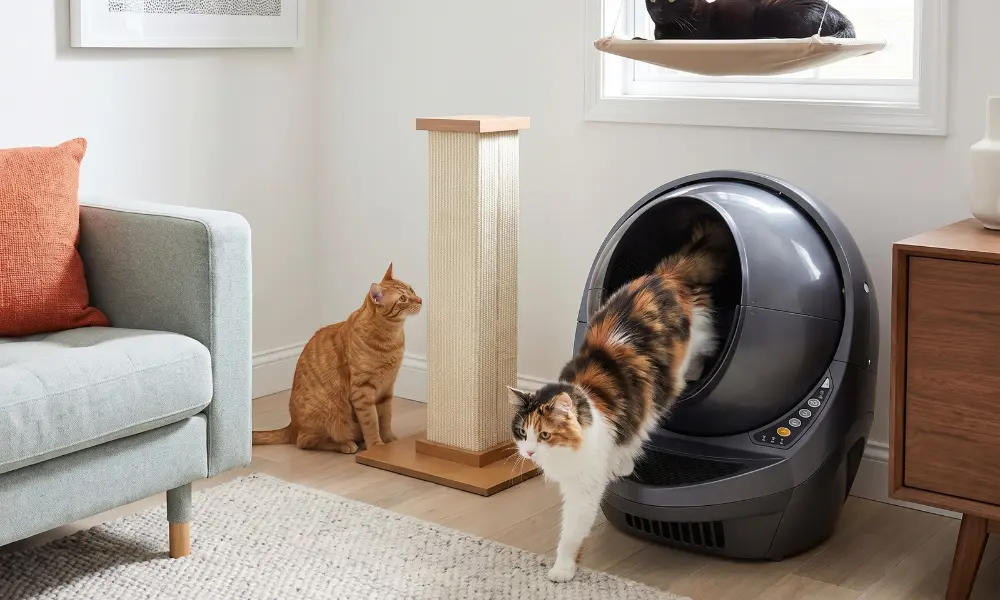
This is the part the ads never tell you:
- Kittens under 3 pounds or 6 months — too light to trigger weight sensors reliably. The cleaning cycle can activate while they’re still inside
- Senior or arthritic cats — raised entry points on globe-style boxes can be genuinely painful for cats with joint problems. A cat who avoids the box because it hurts will eliminate elsewhere
- Anxious or easily startled cats — the mechanical sound of an unexpected cycle can create a lasting aversion to the litter box that’s very hard to undo
- Cats being medically monitored — if your vet is watching your cat’s urinary output or stool frequency, an automatic box removes your ability to observe this directly
The Hidden Risk Most Owners Miss
Here’s the one thing we want every automatic litter box owner to hear.
When the box cleans itself constantly, it’s easy to stop checking what your cat is actually producing. And those details — slightly more urine, a change in consistency, a streak of blood — are often the first signals of something medically wrong.
According to Petful’s 2026 veterinary guide on automatic litter boxes, changes in litter box habits are among the earliest detectable signs of medical problems in cats — and automation should be used as a monitoring tool, not a reason to stop paying attention.
Even with an automatic box — check the waste drawer every couple of days. Stay connected to what your cat’s body is telling you.
How to Introduce One Safely
- Keep the old litter box in place alongside the new one — never remove it immediately
- Leave the automatic box switched off for the first few days so your cat can investigate it as a static object
- Once they’re using it comfortably, switch on automatic mode and observe the first few cycles nearby
- If your cat refuses it after 2–3 weeks — don’t force it. A cat avoiding their litter box is a much bigger problem than manual scooping
What to Look for Before You Buy
Stick to named brands — Litter-Robot, PetSafe, CatGenie — with verifiable safety features. Check for dual detection sensors, an adjustable delay timer, and an emergency stop. Avoid unbranded imports from generic listings, especially where customer reviews mention unexpected activation while a cat was still inside.
The Bottom Line
Automatic litter boxes are a genuinely useful tool — for the right cat, from the right brand, with an owner who stays engaged. They’re not a set-and-forget solution. They’re a smarter way to care for your cat’s environment — when you choose carefully and use them thoughtfully.
Now you know exactly what to look for. Go make that decision with confidence.
READ MORE :
Why Is My Cat Throwing Up? What’s Normal and What’s Not
Best Diet for Cats: Wet Food vs Dry Food vs Homemade Food (Vet-Backed Guide)