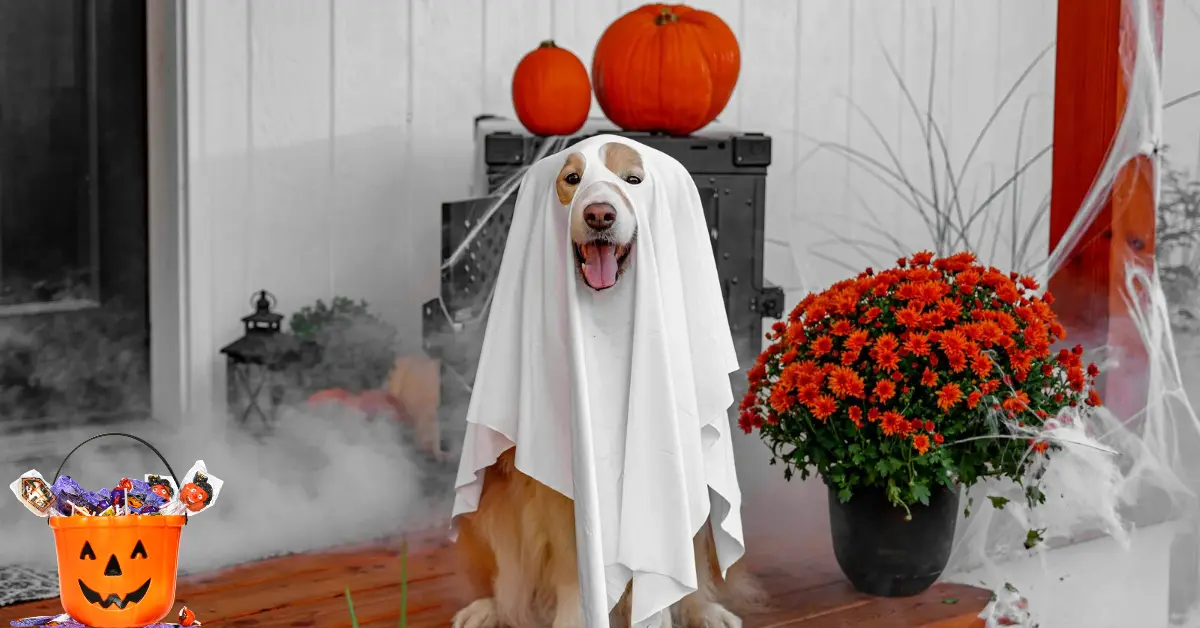
Halloween candy is everywhere this time of year — on the counter, in bags by the door, scattered across the coffee table, stuffed into the kids’ backpacks. And somewhere in the middle of all that chaos, your dog is paying very close attention.
They don’t know what’s in the bowl. They just know it smells incredible and nobody seems to be watching.
That’s the moment things go wrong. And it happens every single Halloween — to good owners, in good homes, with dogs who are loved and well cared for. So before the costumes come out and the trick-or-treaters start knocking, here’s what you genuinely need to know.
Why Halloween Night Is the Riskiest Night of the Year for Dogs
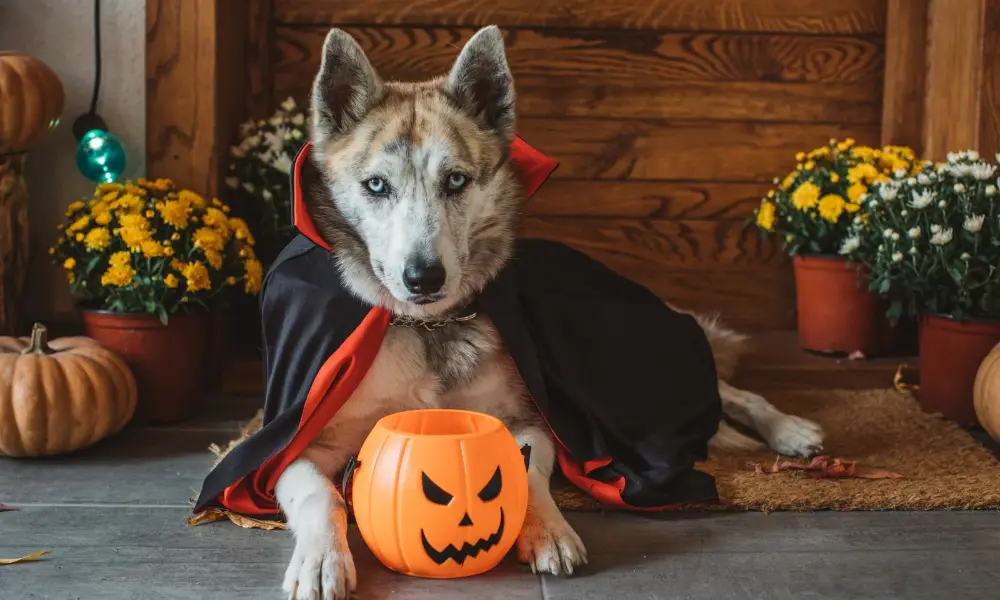
It’s not just the candy itself — it’s the chaos. The front door opening and closing, children running in and out, guests arriving, bags of loot dropped on the floor, wrappers falling between couch cushions.
Normal household rules go out the window for one night, and that’s exactly when dogs find their way into things they never would on a regular Tuesday.
Halloween candy that would normally sit safely on a high shelf ends up within reach. And some of it is far more dangerous than most owners realize.
The 7 Halloween Candy Dangers Every Dog Owner Needs to Know
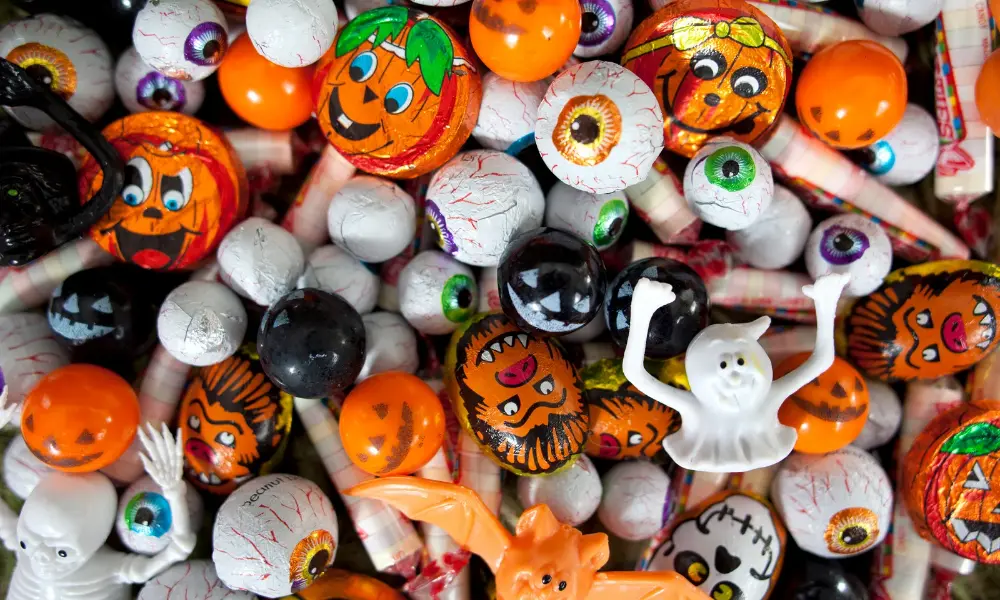
1. Chocolate — the one everyone knows, but not well enough
Yes, chocolate is dangerous. But here’s what most owners don’t know: not all chocolate is equally dangerous, and the difference is significant.
- White chocolate → very low theobromine content, minimal risk
- Milk chocolate → moderate risk. Just 2 ounces — about seven Hershey’s miniatures — can be toxic to a small dog
- Dark chocolate and baking chocolate → the most dangerous. Baking chocolate contains roughly seven times more theobromine than milk chocolate
Theobromine is the compound in chocolate that dogs metabolize far too slowly. It builds up in their system and can cause vomiting, tremors, an irregular heartbeat, and, in serious cases, seizures.
There is no truly safe amount of chocolate for any dog. Any chocolate ingestion is a reason to call your vet, even if your dog seems fine.
2. Xylitol — the danger hiding in plain sight
This is the one that catches owners completely off guard. Xylitol is an artificial sweetener found in sugar-free gummies, hard candies, chewing gum, and some peanut butter products and many vets consider it more dangerous than chocolate on a piece-for-piece basis.
In dogs, xylitol triggers a rapid, massive release of insulin,causing severely low blood sugar within 30 to 60 minutes. In larger amounts, it causes liver failure.
One piece of sugar-free gum can seriously harm a small dog. And xylitol is sometimes labelled as “birch sugar” on ingredients lists. So, it can hide even when you’re trying to check. If your dog ate anything sugar-free, read the label immediately and call your vet before symptoms start. Don’t wait.
3. Raisins and chocolate-covered raisins
That tiny box of raisins might look like the healthiest thing in the Halloween haul. For your dog, it’s an emergency.
Grapes and raisins can cause acute kidney failure in dogs — and the terrifying part is that no safe amount has ever been established. Some dogs are seriously affected by a very small quantity. Because there’s no predictable threshold, every single exposure is treated as urgent.
Chocolate-covered raisins combine two separate dangers in one piece. If your dog got into those — call your vet immediately.
4. Macadamia nuts
These show up in specialty chocolate bars, trail mixes, and baked goods handed out as Halloween treats. Macadamia nuts cause weakness, tremors, vomiting, and difficulty walking ; particularly in the back legs within 12 hours of ingestion. Not typically fatal on their own, but deeply uncomfortable and significantly more dangerous when combined with chocolate, which is common.
5. Candy wrappers, foil, and lollipop sticks
Here’s one that has nothing to do with toxicity — and everything to do with what happens inside your dog’s digestive tract.
A dog who raids the candy bowl often swallows wrappers whole. Foil, cellophane, twist ties, and plastic sticks all become potential intestinal blockages. Signs develop over 24 to 48 hours; repeated vomiting, bloating, loss of appetite, and pain when you touch the belly.
Check how many wrappers are missing — not just how much candy is gone.
6. High-sugar and high-fat candy — even the “safe” ones
Plain candy corn, caramels, gummies, and hard candy aren’t acutely toxic. But in large amounts? They’re not harmless either.
The real concern here is pancreatitis; a sudden, painful inflammation of the pancreas triggered by a large intake of fatty, sugary food. A dog who eats most of a bowl of peanut butter cups or fudge is at real risk. Signs include severe abdominal pain, repeated vomiting, and complete loss of appetite.
7. Peanut butter candy with hidden xylitol
This is the one that surprises people the most. Peanut butter sounds dog-friendly and standard peanut butter cups aren’t the biggest concern. But some reduced-sugar and “natural” peanut butter products are sweetened with xylitol. Any candy, cookie, or baked treat made with those products carries the same risk as any other xylitol product.
Always check the label before assuming peanut butter candy is safe. Xylitol hides in places you’d never expect.
If Your Dog Gets Into the Halloween Candy
Stay calm — panicking doesn’t help them, but acting fast does.
According to the ASPCA Animal Poison Control Center, you should contact your vet, an emergency animal hospital, or poison control immediately if your dog has eaten chocolate, xylitol, raisins, macadamia nuts, or anything you can’t identify.
Save these numbers in your phone right now before you need them:
- ASPCA Animal Poison Control: (888) 426-4435 — available 24/7
- Pet Poison Helpline: (855) 764-7661 — available 24/7
Have ready when you call:
- Your dog’s weight
- What they ate and how much — bring the wrapper
- When they ate it
- Any symptoms already showing
Do NOT induce vomiting without vet guidance. Do NOT wait to see if they seem fine ,especially with xylitol and raisins. By the time obvious symptoms appear with those two, significant damage may already be happening.
Keeping Your Dog Safe This Halloween
A few simple things make a big difference:
- Keep all Halloween candy in sealed containers above counter height
- Tell children early — “this is for us, not for the dog”
- Put your dog in a calm, separate room during peak trick-or-treating hours
- Check floors regularly — dropped candy disappears fast in a busy house
- Watch handbags and coat pockets — sugar-free gum and mints live in these at exactly nose height for most dogs
- If you’re hosting — tell guests upfront that the dog can’t have any, no matter how much they plead with their eyes
Your Dog Can Still Be Part of Halloween
Plain boiled chicken bites, baby carrots, a spoonful of plain canned pumpkin — not pie filling or a frozen Kong stuffed with pumpkin puree. These are completely safe and genuinely enjoyable.
Your dog doesn’t need Halloween candy to have a good night. They just need you paying attention and now you know exactly what to look for.
Save those numbers. Check those labels. And have a wonderful, safe Halloween.
Read More:
What to Do in a Pet Emergency: A Vet’s Step-by-Step Guide
Silent Warning Signs of Food Toxicity in Pets Most Owners Mistake for Normal Behavior